

When we use the word hope, we usually mean something uncertain.
I hope it doesn’t rain.
I hope everything works out.
Hope, to us, often sounds like optimism.
A wish.
A possibility.
The Hebrew Scriptures begin somewhere very different.
They begin with a rope.
Long before Israel used its primary word for hope, it described something you could hold in your hands.
A rope.
A cord.
That surprised me.
Because a rope isn’t wishful thinking.
It connects.
It holds.
It bears weight.
Then I remembered where Scripture first uses the word.
Not in a prayer.
Not in a promise.
But hanging from a window.
When Joshua’s spies prepared to leave Jericho, they told Rahab,
“Tie this scarlet cord in the window…” (Joshua 2:18)
The word translated “cord” is tiqvah.
Later in the Hebrew Scriptures, that same word comes to mean hope.
The Hebrew Scriptures often begin with something you can touch before they teach you something you cannot yet see.
Bread becomes provision.
Light becomes revelation.
A shepherd becomes a king.
A rope…
becomes hope.
Why?
Because hope is not merely something we feel.
It is something by which we are held.
A rope has no strength of its own.
Its strength depends entirely on what it is fastened to.
So it is with hope.
Our confidence has never rested in the strength of our grip.
It rests in the faithfulness of the God to whom our lives are fastened.
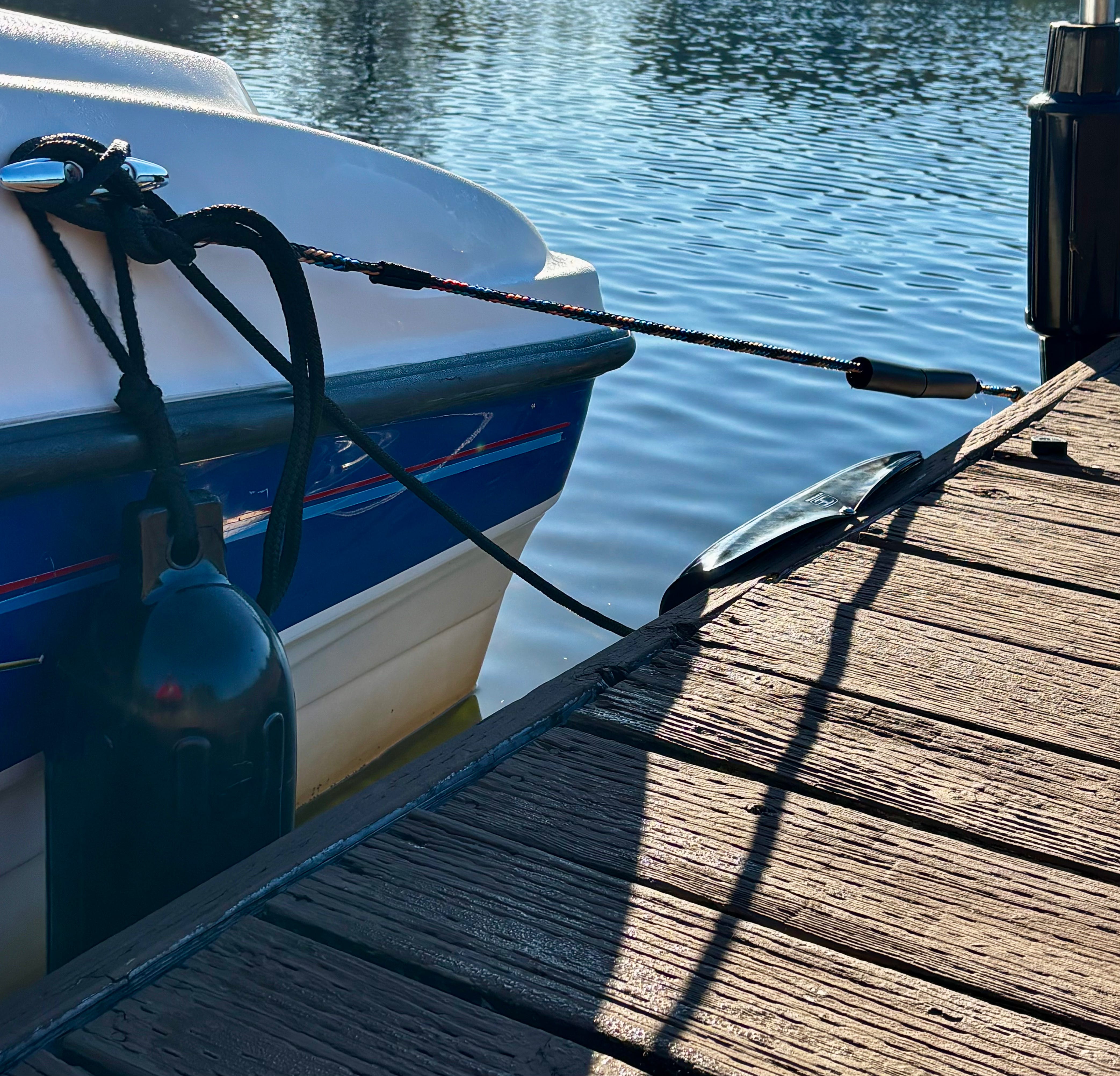
Have you ever noticed that a rope is easiest to ignore when nothing is pulling on it?
It lies quietly coiled on a dock.
Hanging in a garage.
You hardly notice it’s there.
But place it under tension…
and suddenly its purpose becomes clear.
The rope doesn’t become stronger because it is stretched.
It simply reveals what has been holding it all along.
Hope is not the absence of tension.
Hope is what holds under tension.
Daniel knew something about that.
He mourned.
He waited.
He prayed.
Three weeks passed without an answer.
Empires continued rising and falling around him.
Nothing visible suggested that heaven was moving.
Yet Daniel remained tethered to the God who had called him.
Centuries later, the writer of Hebrews reaches for another image.
“We have this hope as an anchor for the soul, firm and secure…” (Hebrews 6:19)
The image changes.
The reality does not.
Rahab’s cord pointed beyond itself.
Daniel’s endurance pointed beyond himself.
Hebrews reveals where our hope is fastened.
Not to changing circumstances.
Not to our own resolve.
But to Christ, who has gone before us.
Hope is not something we manufacture.
It is the confidence that comes from knowing the One to whom we are tethered.
That also changes the way I read Rahab’s scarlet cord.
The cord did not keep Jericho’s walls from falling.
The walls fell.
The shaking came.
The judgment was real.
The cord marked the household that trusted the One who made the promise.
It pointed beyond itself to the God who always keeps His promises.
That is why biblical hope is so different from optimism.
Optimism says,
“I think everything will turn out the way I want.”
Hope says,
“Whatever comes, I belong to the One who keeps His promises.”
That is why the Hebrew Scriptures begin with a rope.
Not because ropes are remarkable…
but because they quietly remind us where our confidence has always rested.
Our confidence has never rested in the strength of our grip.
It has always rested in the faithfulness of God.
Hope has never been about holding on.
It has always been about the One who holds us.
—
©️ Gilda Wray. All rights reserved.
I love Hope! Hope's definition to me is Christ. In hope, I know that no matter what circumstance I am facing, Christ will bring me through. He is my protector, my Savior. My trust is in Him as I am His child and as a Father, He knows exactly what is best for me and whatever situation I may be facing. I trust Him with my life. Without His Hope, there is no light....Amen. Thank you.
It puts me in mind of the hymn. "We Have An Anchor."
Our Hope is literally the tether that binds us to our Anchor Jesus.
Beautifully written!