

A reflection on Ruth 1, emptiness, faithful love, and the God who works beyond what we can see—dwelling in what the text tells us and, at times, what its silences invite us to imagine.
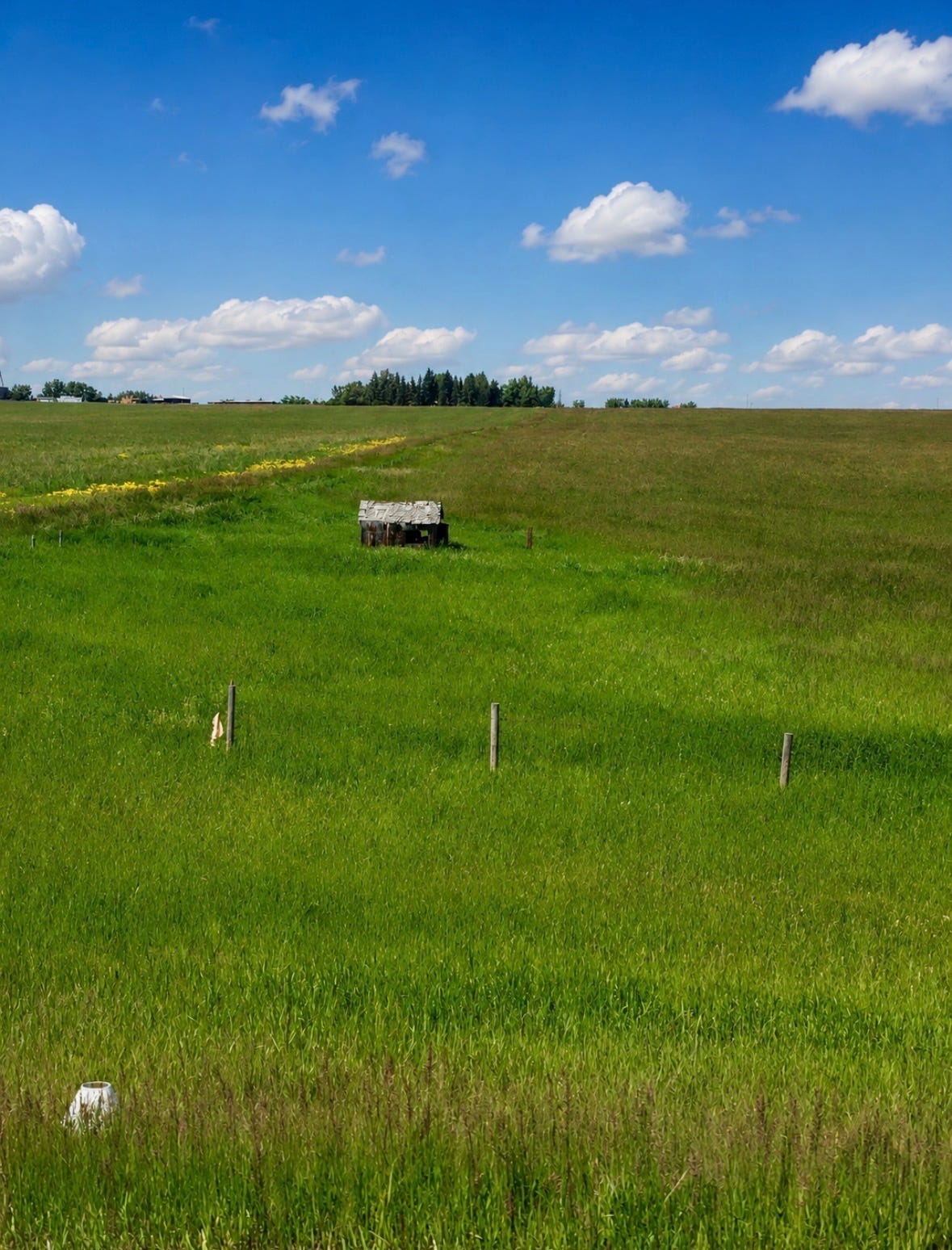
There was no bread in the House of Bread.
It was the time when the judges judged. A time when Israel had no king. A time remembered for the terrible refrain:
Everyone did what was right in his own eyes.
The land had known violence. Tribes had turned against tribes. Men reached for power and used it badly.
And now there was famine.
Hunger rarely announces the moment it becomes hunger. At first, there may simply have been a little less grain gathered from the field. A little less flour beneath the grinding stone. A hand reaching deeper into the storage jar than it had the week before.
Portions becoming smaller. Parents learning to say they were not hungry.
Until less became not enough.
And in Bethlehem—the House of Bread—there was no bread.
Scripture gives us no conversation around the table, no final morning in Bethlehem, no moment when staying became more frightening than leaving. It simply tells us that Elimelech went.
His name was Elimelech—My God is King.
It is difficult not to hear the ache of it.
In the days when Israel had no king, a man named My-God-Is-King left the House of Bread because there was no bread there. Beside him walked his wife, Naomi—Pleasantness. And with them went their two sons, Mahlon and Chilion, whose names have sometimes been associated with sickness and wasting, though their meanings are uncertain.
Four people walked away from Bethlehem because they were hungry.
They went toward Moab.
An Israelite did not hear Moab as geography alone. Old memories lived there: Lot, Balak, Balaam, Peor.
It was a land beyond the familiar, belonging to a people Israel had learned to remember with unease. But famine has a way of changing the roads people are willing to walk.
They meant only to stay awhile.
That matters.
The story says they went to sojourn there—to live as outsiders in another land, not to make Moab their home.
Long enough for Bethlehem’s fields to bear grain again. Long enough for the House of Bread to have bread.
Then they could return.
Some departures begin that way—not as departures at all, but as temporary answers to desperate questions.
They entered Moab and stayed.
Then, without explanation, the story gives us the terrible fact:
Elimelech died.
No reason is given. No judgment is pronounced. The narrator simply leaves us with the absence.
The family had crossed into Moab looking for enough to live.
Now there were three.
⸻
In time, Mahlon and Chilion married two women of Moab.
Orpah and Ruth.
And then the story gives us a number.
Ten years.
We are told remarkably little about those years. They had come intending to sojourn. Somewhere along the way, awhile had become a decade.
Ten years of mornings. Ten years of meals. Ten years in a land that had not been home when they arrived.
Through all those years, no children are mentioned.
No next generation appears.
Then Mahlon and Chilion died.
And suddenly the ten years collapse into one devastating sentence:
“And the woman was left without her two sons and her husband.”
The woman.
For one terrible moment, even her name seems to recede.
Only the woman who remained.
No husband. No sons.
The family that had crossed into Moab looking for enough to live had been reduced to three widows.
They had fled one kind of emptiness and found another.
Later, when Naomi looked back upon the journey from Bethlehem, she would say something astonishing:
“I went away full.”
Full?
There had been famine. There had not been enough bread in the House of Bread.
Yet grief had taught Naomi something hunger could not.
There are emptinesses food cannot fill. And there are kinds of fullness we sometimes recognize only after the chair beside us has become empty.
Naomi had left Bethlehem hungry.
But Elimelech had been beside her. Her sons had walked with them. There had been voices around the table. People to worry about. People to feed. People whose footsteps she knew.
She had thought she was leaving because they lacked something.
Only later would she understand how much she had carried with her.
She had been full.
Now there was bread at home and she was empty.
Or so she believed.
⸻
Then, in the country of Moab, Naomi heard something.
There was bread in Bethlehem.
But the narrator tells us more than that.
YHWH had visited His people and given them bread.
Until now, God has seemed almost hidden within the story.
Famine came. A family left. Years passed. Men died. Widows remained.
But now, for the first time, the narrator tells us explicitly that YHWH has acted.
He visited.
He gave.
And Naomi heard.
Suddenly the road she had traveled ten years earlier opened in the other direction.
The woman who had once walked away from Bethlehem because there was nothing there to eat…
rose to return.
Going Home, Leaving Home
Naomi rose to return. Ruth and Orpah rose with her.
Three widows began on the road toward Judah.
Naomi was returning to a place she knew. For the two younger women, every step carried them farther away from what they knew.
Then, somewhere along the way, Naomi stopped.
She was going home.
They were leaving theirs.
So Naomi turned to them.
“Go, return each of you to her mother’s house.”
Return.
The word begins to gather weight.
Naomi was returning to Bethlehem. Now she asked Ruth and Orpah to return to Moab—to their mothers, their people, the possibility of lives that did not have to remain bound to hers.
The phrase itself is tender: your mother’s house. Naomi is not merely sending them away. She is sending them back toward home, toward family, toward the possibility of being received and cared for again.
Then Naomi blessed them:
“May YHWH deal kindly with you, as you have dealt with the dead and with me.”
The word is ḥesed.
Faithful kindness. Steadfast love. The kind of love that remains faithful to another and often goes beyond what duty alone could demand.
Naomi had already received such love from these women. They had shown ḥesed not only to her, but to the sons she had buried.
Now Naomi answered their faithful love with an act of her own.
She released them.
She could offer no sons. No husbands. No security. No certainty that Bethlehem would receive two Moabite widows kindly.
So she gave them what she still had left to give:
their freedom from her.
That, too, was love.
⸻
Naomi prayed that YHWH would give each woman rest in the house of another husband.
Rest. A home. Belonging. Someone beside them again. A future beyond widowhood.
Then she kissed them and they wept.
Both women protested:
“No, we will return with you to your people.”
But Naomi knew what the road ahead could cost them. She had no more sons to give. Even if the impossible happened—if she married, conceived, bore sons—would Ruth and Orpah wait for them to grow?
No.
Naomi would not allow their lives to be chained to an impossible hope.
She urged them again to return. The three women wept together.
Then Orpah kissed her mother-in-law.
Ruth clung to her.
⸻
The story does not condemn Orpah. She did what Naomi had asked her to do.
She returned to her people, her mother’s house, the familiar world from which she had come.
She chose the reasonable road.
Orpah returned.
Ruth clung.
The Hebrew word is dāvaq.
To cling. To hold fast. To bind oneself to another.
It is the word Genesis uses when a man leaves father and mother and clings to his wife. Later, it becomes the language of Israel holding fast to YHWH.
Here, on the road out of Moab, the word belongs to Ruth.
A Moabite widow with no promise of what waited ahead simply—
clung.
⸻
Naomi tried once more.
“See, your sister-in-law has gone back to her people and to her gods; return after your sister-in-law.”
There was still time.
The road behind Ruth remained open. She could return to her mother, her people, her land, her gods.
Another husband might still come.
Another household.
Another beginning.
Naomi was giving her permission to turn around.
Ruth answered by closing the road behind her.
“Do not urge me to leave you or to return from following you.”
Then come the words that have crossed thousands of years:
Where you go, I will go.
Where you lodge, I will lodge.
Your people shall be my people.
And your God my God.
Where you die, I will die.
And there I will be buried.
This was more than companionship for the journey to Bethlehem.
Ruth was not saying, I will walk you home.
She was saying:
Your home will become mine.
Even death would not send her back to Moab. She would be buried where Naomi was buried.
The woman Naomi had tried to release had freely bound herself to her.
Naomi offered ḥesed by letting go.
Ruth answered ḥesed by holding fast.
⸻
There, on an unnamed road, something happened that no one watching the great affairs of Israel would have noticed.
It was the time when the judges judged. Men fought. Tribes contended. Power announced itself with weapons and armies.
Here we see no armies. No wealth. No husbands. No sons.
Only three widows deciding what love required of them.
Each exercised the small territory of freedom still belonging to her.
Naomi released.
Orpah returned.
Ruth clung.
No trumpet sounded. No prophet announced what had happened. No one recorded it among the great political events of Israel.
But history moved.
The road toward Israel’s king was passing through the faithfulness of women who possessed almost nothing the world called power.
Ruth could not raise Naomi’s dead. She could not restore Elimelech. She could not replace the sons Naomi had buried.
She could not guarantee bread. She could not promise that Bethlehem would welcome a woman from Moab. She could not control what happened next.
She could offer only what remained within her power.
Herself.
We often imagine power as the ability to control what happens next.
Ruth shows us another kind:
the freedom to love faithfully when we have no idea what happens next.
She knew only the grieving woman standing beside her.
And she loved her.
The Woman Who Came Home
Two women continued toward Bethlehem.
One was returning home. The other was leaving home behind.
Naomi knew the road was leading toward something familiar. Ruth was walking toward a people she did not know, carrying little with her except the promise she had made.
Your people shall be my people.
Your God, my God.
And so they walked.
Then Bethlehem came into view.
The House of Bread.
Naomi had heard in Moab that YHWH had visited His people and given them bread. Now she returned to the place He had visited.
As the two women entered the town, something else had returned to the House of Bread.
Pleasantness.
“Is this Naomi?”
The women recognized her.
Or tried to.
Ten years had passed. A husband had been buried. Two sons had been buried. Whatever grief had written upon her face, the woman standing before them was changed enough that the whole town stirred at her arrival.
They called out her name.
Naomi.
Pleasantness had returned to the House of Bread.
Naomi, though, could no longer hear herself in that name.
“Do not call me Naomi,” she answered. “Call me Mara.”
Do not call me Pleasantness.
Call me Bitterness.
Grief had reached so deeply into Naomi that she no longer merely described what had happened to her as bitter.
She gave the bitterness her name.
“For the Almighty has dealt very bitterly with me.”
Then she explained:
“I went away full, and YHWH has brought me back empty.”
There is no easy answer to words like those.
And the story does not offer one.
No one rebukes Naomi. No one points toward Ruth and asks how she can possibly call herself empty when someone loves her enough to have left everything and followed her there.
The story gives grief room to speak.
Naomi had buried her husband. She had buried both her sons.
She had left Bethlehem believing hunger was emptiness and returned knowing there are emptinesses bread cannot touch.
She had learned what full meant by losing it.
So the story lets her say:
I am empty.
⸻
But then something curious happens.
Naomi had said: Call me Mara.
And yet, no one does.
Not Ruth. Not the women of Bethlehem. Not the narrator.
The very next verse calls her Naomi again.
The story does not argue with her grief.
It simply refuses to rename her by it.
She called herself Bitterness.
The story continued to call her Naomi—Pleasantness.
Her suffering was real. Her bitterness was real. Her emptiness was real.
Yet none of them becomes her name in the story.
There is extraordinary tenderness in that.
Scripture does not silence the grieving woman. But neither does it surrender her identity to grief.
⸻
For a moment, the story seems to hold three different ways of seeing the same woman.
Bethlehem sees the woman it remembers:
Naomi.
Naomi sees what grief has made of her:
Mara.
Beyond them both, the narrator is already looking toward the fields.
There is something there Naomi cannot yet see.
She has just told Bethlehem:
“I went away full, and YHWH has brought me back empty.”
All the while, standing beside her is Ruth.
Ruth, who had clung to her.
Ruth, who had surrendered the road home.
Ruth, whose faithful love was already carrying possibilities neither woman could see.
Love does not make the dead interchangeable.
We should never use what remains to diminish what has been lost.
Naomi is empty in ways Ruth cannot fill.
From where Naomi stands, she can see what fullness was.
She cannot yet see what fullness might become.
The rest of the story will show us.
⸻
Ruth 1 ends with one quiet sentence.
No miracle. No explanation. No promise spoken from heaven.
Only this:
“And they came to Bethlehem at the beginning of barley harvest.”
The beginning.
They do not know whose fields lie ahead. Nor do they yet know what those fields will eventually give them.
They see only Bethlehem—a town they have finally reached—and fields beginning to yield again.
The chapter that opened with famine closes with harvest.
It began with a family leaving the House of Bread because there was no bread.
It ends with two widows arriving there just as the grain is ready to be gathered.
Nothing Naomi has lost has yet been restored. Nothing about tomorrow has been explained.
She still feels empty. Ruth is still a foreigner. They are still widows.
But beyond them, the barley is beginning to ripen.
What Neither Woman Could See
Naomi could not see beyond those fields.
She did not know that Ruth would soon enter the field of Boaz—or what that man would come to mean in their story.
She could not imagine the child who would one day be placed in her arms.
Obed.
Nor the son who would come after him.
Jesse.
Nor Jesse’s son.
David.
A king.
The book had begun in the days when there was no king.
Yet the road toward Israel’s king had passed through an unnamed stretch between Moab and Bethlehem, where three widows made choices almost no one would have considered important.
No one standing in Bethlehem that day could have known what had arrived with them.
Not even Ruth.
She had no promise of Boaz. No promise of a child. No glimpse of David waiting generations beyond her.
She knew only the grieving woman standing beside her on the road.
And she loved her.
That was all she could see.
That was enough.
We often imagine faithfulness as though it requires knowing what God is doing.
Ruth knew almost nothing of what God was doing.
She simply knew what love required of her in the place where she stood.
She walked.
She stayed.
She loved.
And beyond what she could see, God was at work.
⸻
Generations would pass. Kingdoms would rise and fall. Israel would know kings and lose them.
Centuries later, another woman would travel toward Bethlehem, arriving without the kind of power the world readily recognizes.
No palace awaited her. No army accompanied her.
And there, in the House of Bread, Mary gave birth to the Son of David.
Jesus.
The One who would later say:
“I am the Bread of Life.”
Ruth’s narrator does not tell us that Bethlehem’s name, the famine, or the barley secretly pointed toward those later words of Jesus.
But once the whole scriptural story has unfolded, it is difficult not to stand in wonder at the resonance.
The House of Bread that once had no bread. The fields beginning to yield. Ruth gathering grain. David arising from her family.
And generations later, the Bread of Life born in that same little town.
Not a code.
A story.
A story whose fullness no one standing in Ruth 1 could possibly have seen.
⸻
Maybe that is why I keep returning to the final verse of the chapter.
Naomi has told us what she sees.
Empty.
The final sentence simply turns our eyes toward the fields.
That may be one of the tenderest things Scripture does for those of us who have lived through seasons we could not understand.
It does not require us to call loss good. It does not ask us to pretend emptiness does not hurt. It does not promise that everything taken from us will simply be replaced by something else.
It allows Naomi to grieve.
It allows her to say empty.
Then it quietly reminds us that our present field of vision is not the whole story.
Naomi could not see Boaz. Ruth could not see Obed. Neither could see David.
None of them could see Christ.
But their inability to see what God was doing did not mean God was not doing it.
At the beginning of Ruth, there was no king. There was no bread. There seemed to be no future.
And God’s answer did not arrive looking like power.
It looked like two widows walking home.
One believed bitterness had become her name. The other was a foreigner who refused to let her walk alone.
Neither knew what waited beyond Bethlehem. Neither knew what those fields would someday mean.
They simply reached the House of Bread at the beginning of barley harvest.
Naomi called herself empty.
Ruth stood beside her.
And beyond them, the grain was already growing.
The harvest had begun.
⸻
© Gilda Wray. All rights reserved.
You do such a good job of seeing Naomi and her husband‘s decision to sojourn in Moab through compassionate eyes. I have heard judgment preached against both.
You sound like someone who has the spiritual gift of mercy.
I also enjoy the bread theme you brought out that I have never noticed before.
Well done lovely lady!
This is a great perspective into those 3 widows. Great lessons for us there. And I love the aspect of none of them knowing what was next. It really is good for us to try and read from their perspective. Try and forget what we know is coming next and read on the edge of our seats with them. Thanks.