

A reflection on Ruth 2, hidden kindness, belonging, and the God whose ḥesed had not let them go
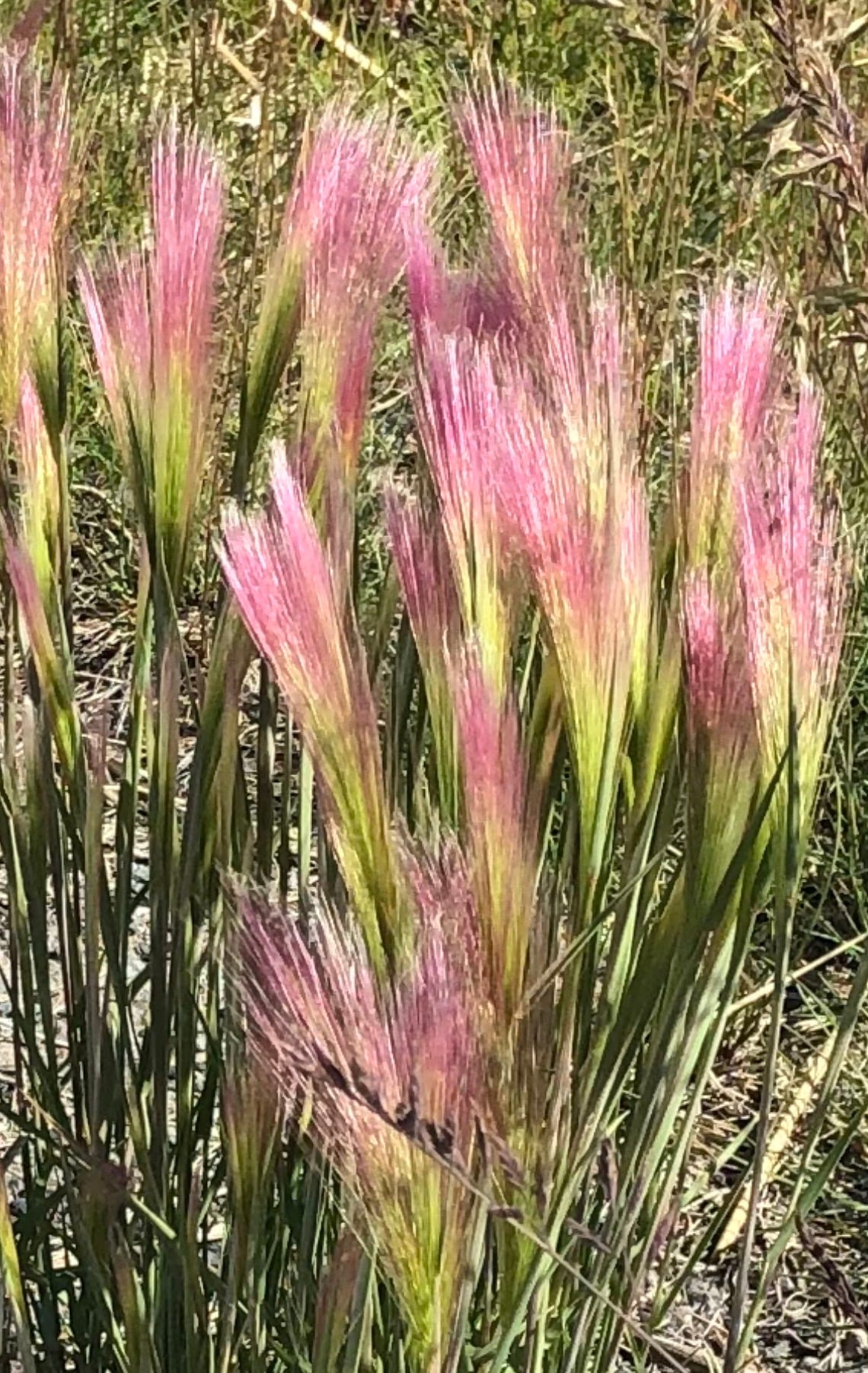
The harvest had begun.
Naomi did not yet know what that meant.
She knew only that she had returned to Bethlehem with less than she had carried away. A husband was buried in Moab. Two sons beside him.
Ten years had passed somewhere between leaving and returning, and the woman who had once walked away from the House of Bread with a family had walked back beside a single Moabite widow.
She had told the women of Bethlehem what she believed to be true:
I went away full.
YHWH has brought me back empty.
That was what she could see.
But beyond the houses of Bethlehem, barley bent beneath the morning wind.
The harvest had begun.
And somewhere among those fields was a man Naomi had not mentioned.
His name was Boaz.
⸻
The narrator tells us about him before Ruth ever meets him.
He was related to Elimelech, a gibbôr ḥayil—a phrase that could speak of strength, capability, substance, standing.
Whatever mixture of those things the narrator intends, Boaz was a man with resources and influence.
Yet the story will show us what he does with them.
And there is something the reader cannot yet know.
Before this story is finished, the same word will be spoken of Ruth. She will be known as an ʾēšet ḥayil—a woman of ḥayil.
Boaz has the kind of power a community readily sees.
Ruth carries the kind a community will learn to see.
The story is bringing two people of ḥayil toward one another.
Ruth knew none of this.
She knew only that two widows needed food.
So one morning she said to Naomi:
“Let me go to the fields and glean among the ears of grain behind someone in whose eyes I may find favor.”
It was not an unreasonable hope.
Long before Ruth ever walked into Bethlehem, Israel’s Torah had commanded landowners not to harvest every edge of their fields or gather every fallen stalk. Something was to remain for the poor and the foreigner. Elsewhere, the command specifically included the widow.
Ruth stood among those Torah had specifically commanded Israel not to forget.
Poor. Widowed. Foreign.
Before Ruth knew she would need a place among the barley, the law had already made room for someone like her.
But Ruth knew something laws alone cannot guarantee.
There is a difference between being permitted somewhere and being wanted there.
She was a Moabite.
She needed more than a field where gleaning was technically allowed.
She needed to find someone in whose eyes she might find favor.
So Ruth went looking for a field.
And then the narrator gives us one of those little sentences whose meaning seems larger than its words.
The Hebrew almost playfully says that “her chance chanced upon” the portion of the field belonging to Boaz.
She did not know it was his.
She did not know who Boaz was.
There was no voice from heaven telling her where to turn. No angel stood at the crossroads. No sign appeared above the barley.
She simply walked into a field.
And it happened to belong to Boaz.
Then:
Behold—
Boaz came.
⸻
This is sometimes what providence looks like from inside a life.
Not providence as explanation.
Not providence as an answer for why terrible things happened.
Just an ordinary morning. A road. A field. A decision that did not feel particularly momentous when it was made.
Ruth could see only the next few steps.
The narrator could see farther.
He knew something Ruth did not.
Boaz was already there.
Before Ruth knew where she would find bread, the field existed.
Before she knew the name of the man who owned it, he existed.
Before Naomi knew whether anything remained of Elimelech’s family, a relative was already living nearby.
Even before Ruth was born, Torah had made space at the edges of Israel’s fields for the poor and the foreigner.
The provision Ruth could not yet see did not begin when she discovered it.
⸻
Boaz entered his field and blessed his workers.
“YHWH be with you.”
“YHWH bless you,” they answered.
Then he looked across the field and noticed someone.
“Whose young woman is this?”
His overseer knew.
The Moabite woman.
The one who came back with Naomi.
The one who had been working since morning.
So word had traveled.
The faithfulness no one had announced on that lonely road from Moab had been noticed after all.
Boaz had heard about the woman who refused to leave Naomi alone. He had heard that she left her father and mother, her native land, everything familiar, and came to live among a people she had not known before.
There was something strangely familiar in the way he told her story.
A person leaving land and family for an unknown people and an unseen future.
Israel’s story had begun with Abraham walking such a road.
Now a woman from the nations had walked one toward Israel.
And she was standing in Boaz’s field.
He called to her.
“My daughter.”
The overseer had identified her as the Moabite woman—an origin, a category, a distance she could not simply erase.
Boaz used a different word.
My daughter.
Ruth had left her father and mother behind in Moab. In a few moments, Boaz himself would speak of them—of the father and mother she had left, the homeland she had walked away from.
We are not told what happened inside Ruth when this older man called her my daughter.
Perhaps nothing showed.
Perhaps, for just a moment, the words carried her back across the road she had traveled—to another voice, another home, another man who had once called her daughter.
We cannot know.
But the word deserves to linger.
She had entered the field known as the Moabite woman.
Boaz spoke to her as:
My daughter.
Stay here.
Do not go to another field.
Stay close to my young women.
Then Boaz did something that reveals what kind of gibbôr ḥayil he was.
“I have commanded the young men not to touch you.”
Ruth was poor, widowed, foreign, and working among strangers. Boaz understood the vulnerability of her position.
He did not merely tell Ruth to be careful around his men.
He told his men how they were required to behave toward Ruth.
Do not touch her.
Later:
Do not shame her.
Do not rebuke her.
His authority became a boundary around someone who possessed very little authority of her own.
And the setting matters.
These were the days when the judges judged—a period the biblical story remembers for powerful men repeatedly using vulnerable people terribly.
Boaz shows us another kind of strength.
His power does not make Ruth more vulnerable.
His power becomes shelter.
Then he said:
“When you are thirsty, go to the vessels and drink from what the young men have drawn.”
⸻
There was an old memory attached to the name Moab.
Israel remembered that Moab had not met them on their journey with bread and water.
Generations had carried the memory.
Ruth carried the name.
But Boaz did not make Ruth carry the inherited hostility attached to the name of Moab.
He did not pretend history had never happened. He simply refused to make that history the measure by which he saw the woman standing before him.
She was not Balak.
She had not stood against Israel in the wilderness.
She had not stood beside the road generations earlier and withheld bread and water.
She was Ruth.
And Boaz had heard what Ruth had done.
So where an old story remembered withheld water, Boaz said:
Drink.
And soon he would say:
Come and eat.
This is one of the quiet ways old hostilities finally begin to die.
Someone decides that the person standing before them will not be made to answer for every wound attached to their name.
⸻
Ruth fell upon her face.
“Why have I found favor in your eyes, that you should notice me, since I am a foreigner?”
It may be one of the saddest questions in the chapter.
Why did you notice me?
Ruth knew how easily a person like her could become invisible.
A widow. Poor. Foreign. Working behind the harvesters for whatever others left behind.
Yet Boaz had seen her.
More than that—he knew her story.
“I have been fully told what you did for your mother-in-law after the death of your husband.”
Her father.
Her mother.
Her homeland.
Boaz knew what she had left.
Then he spoke words Ruth could not yet know would return to him.
“May YHWH repay you for what you have done, and may your reward be full from YHWH, the God of Israel, under whose wings you have come to take refuge.”
Under His wings.
Ruth had left one country for another.
One people for another.
One future for an unknown one.
Boaz saw something deeper in her journey.
She had come beneath the wings of Israel’s God.
There were no wings to see.
Only barley. Workers. Water jars. And a man whose power had just become shelter around her.
Ruth could not yet know how strangely his prayer would return.
Later she would stand before Boaz and ask:
Spread your wing over your servant.
For you are a redeemer.
The man who prayed that Ruth would find shelter beneath God’s wings would discover that he himself had been given the opportunity to become part of that shelter.
But not yet.
For now, there was lunch.
⸻
“Come here,” Boaz said.
And the foreign woman came near.
The woman who had begun the morning gleaning behind the reapers—stooped beneath the work, easily overlooked among the movement of the harvest—now sat beside them.
Not behind.
Not apart.
Beside.
He gave her bread. He gave her something in which to dip it. Then Boaz himself passed roasted grain to her.
Ruth ate.
She was satisfied.
And there was some left over.
A woman who had entered that field wondering whether she might find favor enough to glean now sat beside the reapers and received food from Boaz’s own hand until she was satisfied.
The book had begun with famine.
No bread in the House of Bread.
Now a Moabite widow sat beside Israelite harvesters in Bethlehem and ate until she was satisfied.
And there was still more.
Bread. Water. Satisfaction. Remainder.
The old story of scarcity was beginning to move in another direction.
Yet Ruth did something with the remainder.
She kept it.
Not because she was afraid there would never be another meal.
Because someone else was waiting at home.
⸻
Ruth rose and returned to the field.
Boaz quietly spoke to his workers.
Let her glean even among the sheaves.
Do not shame her.
Then he went farther.
Pull some grain deliberately from the bundles.
Leave it where she can find it.
Do not rebuke her.
Ruth did not hear him say this.
That matters.
She simply returned to work.
She bent down. Gathered. Moved farther along. Bent down again.
And among what she gathered was grain she did not know had been deliberately pulled from the bundles and left where she could find it.
Ruth saw the grain.
The reader had heard the instruction.
There are moments in Ruth when the characters experience the effects of kindness whose causes remain hidden from them.
Ruth did not hear the instruction.
She only found the grain.
And sometimes that is all any of us can see.
The thing that was there when we needed it.
The person who happened to appear.
The door that opened.
The strength that lasted another day.
We should be careful about naming every coincidence as a secret message from God. Ruth itself is careful.
It does not tell us that YHWH whispered to Boaz to pull grain from the bundles.
It simply lets us watch kindness working beyond Ruth’s sight.
She sees what has been given.
We are allowed to see a little more.
⸻
By evening Ruth had gathered an extraordinary amount.
She beat out the barley and carried it back into Bethlehem.
Naomi saw it before Ruth had said a word—the weight of it, the sheer unexpected amount of it, far more than she might have expected from a day’s gleaning.
For years Naomi had learned to measure life by what was missing.
Now here was an evening measured by what had been given.
Then Ruth reached for something else.
The food she had saved from Boaz’s table.
What remained after she had eaten and been satisfied.
And she gave it to Naomi.
Boaz had fed Ruth.
Ruth fed Naomi.
The abundance did not stop with the person who received it.
It moved.
As ḥesed so often does.
⸻
Naomi looked at the barley.
“Where did you glean today?”
Whatever Naomi expected Ruth to bring home, the sight of the barley made her ask where she had been.
This was not the handful a widow might ordinarily gather from the edges.
Someone had made room for Ruth.
Someone had noticed her.
So before Naomi even knew his name, she blessed him.
“Blessed be the one who noticed you.”
The one who noticed you.
Ruth had wondered the same thing earlier.
Why have I found favor in your eyes?
Why did you notice me?
Now Naomi wanted to know too.
Ruth answered:
“The name of the man with whom I worked today is Boaz.”
Boaz.
There are names that mean little until someone who knows the story hears them.
Ruth knew a generous landowner.
Naomi heard family.
“The man is near to us.”
Then she said the word Ruth had not yet understood.
“He is one of our gōʾelîm.”
One of our redeemers.
One of those close enough to the family to act when the family can no longer restore what has been lost.
Suddenly Naomi could see farther than the barley in Ruth’s hands.
⸻
Then the woman who had returned to Bethlehem calling herself Bitter said something she could not have said when she entered the town:
“His ḥesed has not abandoned the living and the dead.”
Whose ḥesed?
The Hebrew leaves the words beautifully open.
Boaz had certainly shown ḥesed.
But Naomi seems to be seeing beyond Boaz now.
Perhaps the distinction did not need to be sharp.
God’s kindness had reached her through human hands.
Through Ruth’s hands.
Through Boaz’s field.
Through barley deliberately left where a widow could find it.
The God Naomi thought had emptied her had not explained Himself.
He did not tell her why Elimelech died.
He did not explain Mahlon or Chilion.
Nothing resurrected the men Naomi had buried.
Nothing required her to call those losses good.
Yet death had not erased their names, their family, or every possibility of their household continuing.
There was still someone near.
A gōʾēl.
The story had begun with a man whose name confessed:
My God is King.
Elimelech had died in a foreign land, in the days when Israel had no king.
But the confession carried in his name had not died with him.
God was still King.
Quietly, beyond what Naomi had been able to see, the story was still moving.
The dead were still remembered.
Their names still mattered.
Their family still mattered.
Their inheritance still mattered.
There remained someone near enough to act on their behalf.
Naomi still did not know what would happen next.
But she was beginning to understand that unanswered questions were not the same thing as abandonment.
⸻
That may be one of the tenderest movements in Ruth.
Naomi does not recover hope because someone explains her suffering.
She recovers hope because she begins to recognize kindness.
A Moabite woman refused to leave her.
A landowner noticed that woman.
A field yielded more than expected.
Bread came home.
Then a familiar name:
Boaz.
Nothing made Moab disappear.
Nothing required Naomi to call her losses good.
But grief was beginning to loosen its grip upon what she believed those losses meant.
At the end of chapter one she could say:
God has brought me back empty.
Now she could say:
His ḥesed has not abandoned us.
She still had questions.
But abandonment was no longer the only possible interpretation of the silence.
⸻
Ruth continued gleaning in Boaz’s fields through the barley harvest and the wheat harvest.
She stayed close to his young women.
Clung to them, the Hebrew says.
The same word used when Ruth clung to Naomi on the road from Moab.
She had clung to Naomi when belonging cost her everything familiar.
Now that faithfulness had carried her into a place where belonging was beginning to gather around her.
A field.
Women to work beside.
A man who would protect her.
Food enough to eat.
Food enough to carry home.
She was still a widow. Still a Moabite. Still poor.
Nothing had yet happened that anyone outside Bethlehem would have considered important.
But the story was moving.
⸻
And there is one more thing we can see that Ruth could not.
Boaz had prayed:
May YHWH give you a full reward, because you have come to take refuge beneath His wings.
Ruth did not yet know that she would one day ask Boaz to spread his own wing over her.
Boaz did not yet know that the prayer he had spoken might eventually require something from him.
Naomi did not yet know that the man whose name had awakened hope would become part of preserving the name of her dead.
None of them knew about Obed.
Or Jesse.
Or David.
They certainly could not see Bethlehem centuries later.
Another woman.
Another arrival.
Another Son.
The Son of David.
The One who would say:
“I am the Bread of Life.”
The One who would call the thirsty to come and drink.
The One who would take bread into His hands and feed thousands until they ate, were satisfied, and there was some left over.
We need not turn Boaz into Jesus to hear the larger resonance.
Boaz was one of Naomi’s gōʾelîm—a human family redeemer with a field, grain, authority, and standing.
But that may be precisely why his story matters.
Standing in Boaz’s field, we begin to see something about the shape redemption takes.
Power becomes protection.
Abundance becomes generosity.
The foreigner is invited near.
The hungry are fed.
The vulnerable are not shamed.
The dead are remembered.
And the one who has resources uses them to restore what another cannot restore alone.
Boaz prayed that Ruth would find refuge beneath God’s wings.
Then he used what had been placed within his own hands—his field, his grain, his authority, his standing—to become part of the shelter for which he had prayed.
Boaz shows us what a man using power for the benefit of others looks like.
He was already a gibbôr ḥayil when the story introduced him.
The question was what kind of mighty man he would be.
In the days when the judges judged, when strength so often became the power to take, Boaz used strength to protect, provide, welcome, and restore.
And standing somewhere in his field was another person of ḥayil—though the town had not yet learned to call her that.
Ruth.
Perhaps one of the ways people discover that God’s ḥesed has not abandoned them is when someone else uses what power they possess to refuse to abandon them either.
⸻
The chapter ends without a wedding.
Without a child.
Without a king.
There is still no great miracle.
Only Ruth going out each morning.
Gleaning. Coming home. Staying close.
And Naomi beginning to see.
At the beginning of the chapter, Ruth had gone looking for someone in whose eyes she might find favor.
By the end, she had been noticed.
But Naomi had discovered something larger.
The woman who had returned saying,
I am empty,
now held barley someone had quietly left behind for Ruth to find.
She still could not see the end of the story.
Neither could Ruth.
Neither could Boaz.
But ḥesed was moving through the fields.
The dead had not been forgotten.
The living had not been abandoned.
And somewhere between the handfuls of grain, the shared bread, and the kindness of a man whose power had become shelter, Naomi began to see what grief had once made impossible to imagine.
She had thought she had returned unnoticed.
Ruth had gone into the fields hoping someone might notice her.
Boaz did.
And through the kindness of human hands, Naomi began to wonder whether Someone else had been seeing them all along.
The harvest had begun.
Now hope had begun with it.
⸻
© Gilda Wray. All rights reserved.
I like how you pointed out Gods providence in the common or mundane. What a good thing to remember. I also thought your point on power as shelter during that time was a great observation. Thanks for sharing. I’m looking forward to chapter 3!
Great observations, Gilda!