

A reflection on Ruth 3, refuge, courage, and the kind of strength revealed when no one is watching
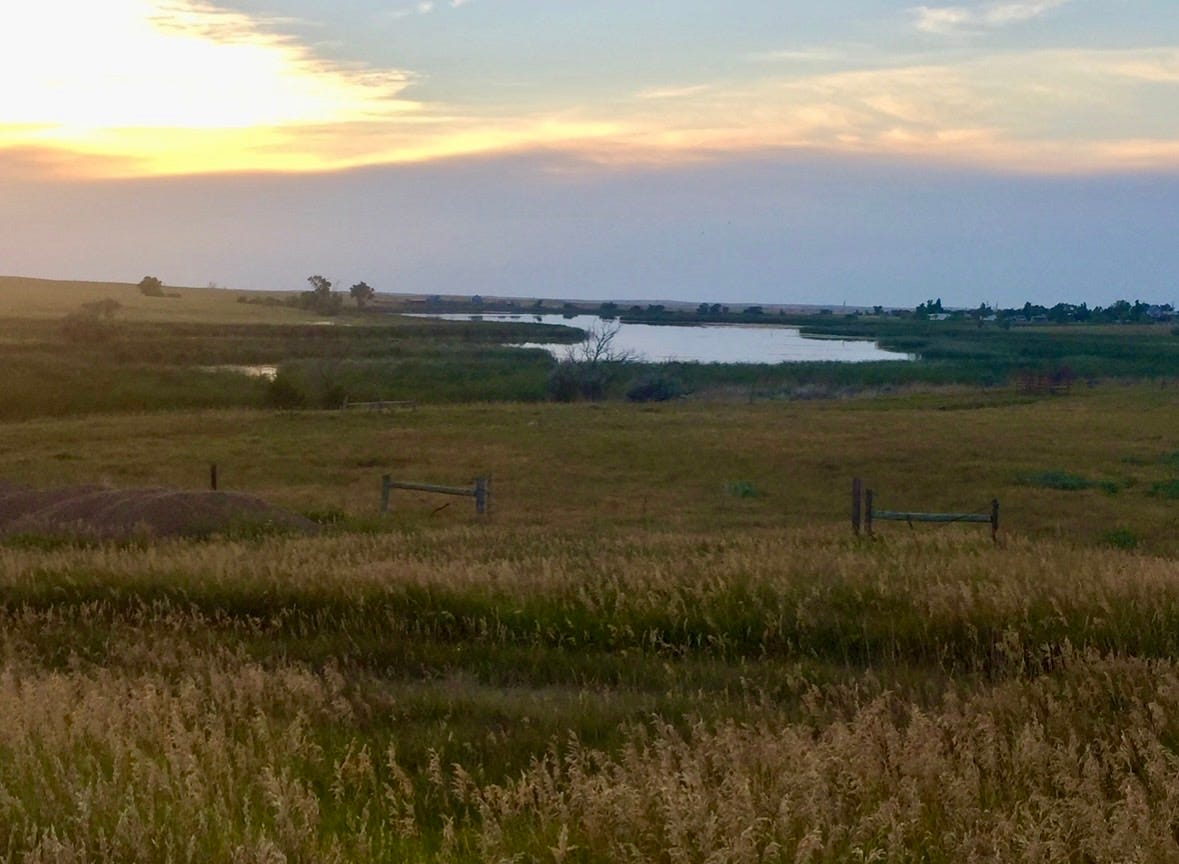
The barley harvest was nearly over.
For weeks Ruth had gone out in the morning and returned in the evening. She had learned the fields. The women. The rhythm of the reapers.
And the name of the man who had noticed her.
Boaz.
What had begun as survival had slowly become something else.
There was food now. There was work. There was safety.
Naomi had begun to recognize ḥesed where once she had seen only emptiness.
But Naomi could see something Ruth’s daily gleaning could not provide.
Ruth needed more than another harvest.
She needed somewhere to rest.
So Naomi said:
“My daughter, should I not seek rest for you, that it may be well with you?”
Rest.
Naomi had spoken that word before.
On the road from Moab, when she was trying to persuade Ruth and Orpah to leave her, she had prayed:
“May YHWH grant that you find rest, each of you in the house of her husband.”
Back then, Naomi believed Ruth’s future could not be found with her. She could only release her and pray.
Now something had changed.
The woman who had returned to Bethlehem saying,
I am empty,
had begun looking beyond her own emptiness toward someone else’s future.
Before, Naomi had prayed for Ruth’s rest.
Now she began to seek it.
This too may have been part of Naomi’s restoration.
Grief had not disappeared. The graves in Moab remained.
But grief was no longer the only thing she could see.
She could see Ruth.
⸻
Naomi had been thinking about Boaz.
Was he not their relative? Was Ruth not already working among his women?
And that night, Naomi knew, Boaz would be winnowing barley at the threshing floor.
So she gave Ruth instructions.
Wash.
Anoint yourself.
Put on your garment.
Go down to the threshing floor.
Wait until he has finished eating and drinking.
Watch where he lies down.
Then go.
Uncover the place at his feet.
Lie down.
“He will tell you what you should do.”
It was an unusual plan.
And a vulnerable one.
A young widow.
A threshing floor.
Night.
A sleeping man.
The story does not pretend there is no tension here.
These were still the days when the judges judged. Israel’s stories from those years knew what could happen when vulnerable women found themselves at the mercy of men.
And Hebrew itself allows the scene a certain ambiguity. “Feet” can sometimes function euphemistically.
But the story never tells us that Ruth went to seduce Boaz.
It never tells us they slept together.
It tells us something much quieter.
She went to the place where he was sleeping.
She uncovered the area at his feet.
And she lay down there.
Then she waited.
⸻
The threshing floor grew quiet.
The work was finished. The barley lay nearby.
Boaz slept at the end of the grain heap.
Ruth came softly.
She uncovered his feet.
Then lay down.
Perhaps there was something wonderfully practical in Naomi’s instruction. As the night cooled, uncovered feet might eventually become uncomfortable.
Ruth did not shake Boaz awake.
She did not call his name.
She simply uncovered his feet—
and waited.
The narrator never tells us that cold awakened him.
Only that sometime around midnight:
the man startled.
The Hebrew is stronger than simply saying that Boaz woke:
וַיֶּחֱרַד — wayyeḥĕrad
He started. Trembled.
Something had disturbed him.
He turned.
And behold—
a woman was lying at his feet.
“Who are you?”
Out of the darkness came the answer:
“I am Ruth, your servant.”
Then Ruth did something remarkable.
Naomi had told her:
He will tell you what to do.
But Ruth did not merely wait for Boaz to decide her future.
She spoke.
“Spread your wing over your servant,
for you are a gōʾēl.”
A redeemer.
⸻
Wing.
Boaz had spoken that word before.
When Ruth first stood before him in the field, he had blessed her:
“May YHWH repay what you have done, and may your reward be full from YHWH, the God of Israel, under whose wings you have come to take refuge.”
The Hebrew word was:
כָּנָף — kānāp̄
Wing.
It can also describe the edge or corner of a garment.
Now Ruth used the same word.
Spread your kānāp̄ over me.
The woman who had come beneath God’s wing was asking Boaz to spread his own wing over her.
Shelter me.
Bind your future to mine.
Act as gōʾēl.
Take responsibility for this wounded household.
The image belongs to a larger biblical world.
Much later, Ezekiel would portray YHWH speaking of Jerusalem:
“I spread my wing over you and covered your nakedness… and entered into covenant with you.”
The same Hebrew word:
kānāp̄.
Wing.
Garment-edge.
Covering.
Covenant.
Ruth was not quoting Ezekiel; Ezekiel belongs to a later time.
But together the texts help us hear the world carried by the image.
Ruth was asking for more than protection from the night. She was asking for the covering of committed relationship—for Boaz to bind himself to her and to the endangered household for which he was able to act.
Ancient Jewish readers heard something like this too.
The Aramaic Targum—an ancient interpretive translation read aloud in the synagogue—makes the marriage sense explicit: Boaz is to take Ruth as wife because he is a redeemer.
The ancient interpreter did not hear an invitation to illicit sex.
He heard:
Marriage.
Redemption.
Belonging.
And that makes the echo of Boaz’s earlier prayer even more beautiful.
Boaz had prayed that God would shelter Ruth beneath His wing.
Now Ruth stood before him asking whether Boaz might become part of the shelter for which he had prayed.
There is something beautiful about the way ḥesed works in Ruth.
It rarely remains abstract.
God had commanded Israel to leave grain for the poor.
Boaz left grain.
Boaz fed Ruth.
Ruth carried the food home.
Naomi ate.
Boaz prayed for Ruth’s refuge.
Now Ruth asked Boaz to become part of it.
Sometimes the prayer,
God, please care for this person,
quietly returns to us as:
Then use what I have placed in your hands.
⸻
And Ruth’s request was larger than romance.
She did not simply say:
Marry me.
She said:
You are a gōʾēl.
She had learned the word Naomi first spoke when Ruth came home carrying barley.
A near relative.
Someone positioned within the family to act when loss had placed something beyond another person’s power to restore.
Ruth was asking for a future.
But not only her future.
Naomi’s household stood inside the request.
Even the losses of the dead stood behind it.
Elimelech.
Mahlon.
The household whose story seemed to have ended in Moab.
Ruth’s request reached backward toward the dead and forward toward whatever life might still be possible.
And Boaz understood.
His first words were not accusation.
Not suspicion.
Not desire.
“Blessed are you by YHWH,
my daughter.”
There it was again.
My daughter.
The first time he had called her that, Ruth had been standing in his field wondering why he had noticed a foreigner.
Now she was lying at his feet in the darkness asking him for something far more vulnerable than grain.
And still:
My daughter.
Then Boaz called what she had done:
ḥesed.
“You have made this latter ḥesed greater than the first.”
⸻
The first ḥesed had carried Ruth down the road from Moab.
She had stayed with Naomi when leaving would have been easier.
She had left father. Mother. Homeland. Familiarity.
She had walked toward a future she could not see because she would not leave Naomi to face hers alone.
Now Boaz saw another ḥesed.
Ruth could have pursued a younger man. Poor or rich, Boaz said. She had other possibilities.
But Ruth’s decision was not concerned only with finding herself a husband.
She had bound her future to the future of Naomi’s household.
Her first ḥesed had said:
I will not leave you.
Her latter ḥesed was beginning to say:
If your household can still have a future, I will not walk away from that either.
Then Boaz said:
“Do not fear.”
Three words the vulnerable often need most.
Not:
You should not have come.
Not:
What will people think?
Not:
Now that you are here, I can do whatever I want.
Do not fear.
Then:
“I will do for you all that you ask.”
Why?
Because:
“All the gate of my people knows that you are an ʾēšet ḥayil.”
A woman of ḥayil.
⸻
We have been waiting for those words.
When Boaz first entered the story, the narrator introduced him as:
גִּבּוֹר חַיִל — gibbôr ḥayil
A man of ḥayil.
Strength.
Substance.
Capability.
Standing.
Now Boaz looked at Ruth and used the same great word of her:
אֵשֶׁת חַיִל — ʾēšet ḥayil
A woman of ḥayil.
And Boaz did not make her one.
He recognized what she already was.
That matters.
Boaz had land.
Ruth gleaned in another person’s field.
Boaz had resources.
Ruth had arrived poor.
Boaz could command workers.
Ruth had begun behind those workers, gathering what remained.
His ḥayil had been visible from the moment he entered the story.
Hers had been revealed one faithful decision at a time.
On the road.
In the field.
Beside Naomi.
At Boaz’s feet.
And now Boaz said the whole gate knew.
The town that had first known her by a category—
the Moabite woman—
had watched long enough to learn her character.
ʾēšet ḥayil.
Scripture will use those exact words elsewhere:
“A woman of ḥayil, who can find?”
Proverbs 31.
Near the end of that poem:
“Let her works praise her in the gates.”
Here in Bethlehem:
“All the gate of my people knows that you are an ʾēšet ḥayil.”
We need not claim one text was written specifically to explain the other to hear the canonical resonance.
And Ruth helps rescue the ʾēšet ḥayil from some of the small boxes we have placed around her.
When Ruth received the name, she was not standing inside a perfectly ordered household surrounded by evidence of domestic success.
She was widowed.
Childless.
Foreign.
Poor.
A laborer in someone else’s field.
Living with her widowed mother-in-law.
And Scripture says:
Woman of ḥayil.
Her worth did not begin when a man chose her.
Her strength did not begin when she married.
Boaz did not bestow it.
He noticed it.
⸻
But now Boaz’s ḥayil would also be tested.
Ruth had asked him.
No one was watching.
The darkness concealed them.
And Boaz was willing to become the gōʾēl she had asked him to be.
Yet he said:
“There is a gōʾēl nearer than I.”
Someone else had a prior claim.
He was willing.
But willingness did not give him permission to ignore what was right.
And suddenly the darkness revealed something daylight could not.
Boaz would not take simply because he could.
The days of the Judges had repeatedly shown another kind of power.
Men who saw.
Desired.
Took.
Power without restraint.
Boaz had power too.
In chapter two his power became protection.
Now his power became restraint.
The woman had asked.
The opportunity was present.
The darkness offered secrecy.
And Boaz still honored what was right.
Darkness did not conceal who these two people were.
It revealed them.
Two people of ḥayil.
One brave enough to ask.
One strong enough to wait.
⸻
Boaz promised that the matter would be settled.
If the nearer gōʾēl would redeem, so be it.
If not:
“As YHWH lives, I will redeem you.”
Then Ruth remained at his feet until morning.
Before there was enough light for one person to recognize another, she rose.
Again Boaz protected her.
The woman whom all the gate knew as ʾēšet ḥayil did not need careless suspicion following her through that gate.
He had protected her body in the field.
Now he protected her name.
Then, before she left, Boaz said:
Bring the garment you are wearing.
Hold it out.
He poured barley into it.
Six measures—of what size, the Hebrew never says, and that silence is worth respecting rather than filling in.
But the barley itself had been speaking since the moment Ruth and Naomi entered Bethlehem.
⸻
Ruth returned to Naomi.
And Naomi asked her a strange question:
“Who are you, my daughter?”
The Hebrew really says it that way:
מִי־אַתְּ בִּתִּי — mî ʾat, bittî?
Who are you?
Naomi certainly knew the woman standing before her was Ruth.
She called her:
my daughter.
The question may function idiomatically:
What happened?
What is your situation now?
What has become of the matter?
But the narrator has already made the words echo.
Only hours earlier, in the darkness, Boaz had awakened and asked:
“Who are you?”
Ruth answered:
“I am Ruth, your servant.”
Now Naomi asks:
“Who are you, my daughter?”
And by now the reader may have begun asking too.
Who is Ruth?
The Moabite?
The widow?
The foreigner?
Naomi’s daughter?
Boaz’s servant?
The woman beneath the wing?
Bethlehem has already begun giving its answer:
ʾēšet ḥayil.
A woman of strength.
A woman of substance.
A woman whose character had become known at the gate.
Ruth was still Ruth.
Her past had not been erased.
But it no longer exhausted the possibilities of her future.
She told Naomi everything.
The night.
The promise.
The barley.
Then she explained:
“He gave me these six measures of barley, for he said, ‘You must not go empty to your mother-in-law.’”
Empty.
And suddenly Naomi’s own words were standing in the room with them.
“I went away full,
and YHWH has brought me back empty.”
Boaz knew nothing of that speech, so far as the story tells us.
Yet his words answered it anyway.
Do not go back to Naomi empty.
Not everything Naomi had lost had been restored.
The graves remained.
Elimelech had not returned.
Mahlon had not returned.
Chilion had not returned.
There was no child yet.
No restored household.
No David.
No king.
Only barley.
But barley had been there from the beginning of their return.
Ruth and Naomi had arrived in Bethlehem, the narrator told us, at:
the beginning of barley harvest.
Barley belonged to Israel’s earliest grain harvest. At the beginning of the grain harvest, Israel brought the first sheaf before YHWH.
The barley in Ruth’s garment is not called a firstfruits offering.
We should not make it one.
But the image is fitting.
A first portion is not the whole harvest.
It is enough to tell us more is coming.
And that was precisely where Naomi now stood.
Not everything restored.
Not every question answered.
Not every grave undone.
But beside the woman who had once asked Bethlehem to rename her according to her bitterness now stood another woman carrying barley in her garment.
Not empty.
Not yet full.
But holding the beginning.
Sometimes restoration begins before it is large enough to call restoration.
Sometimes fullness first appears as something you can carry home in a garment.
⸻
Scripture will eventually take the language of firstfruits somewhere Ruth and Naomi could never have imagined.
Paul will call the Spirit the firstfruits while creation still groans.
And the risen Christ:
“the firstfruits of those who have fallen asleep.”
Ruth’s barley is not a prophecy of resurrection.
But the canonical pattern is beautiful.
The first is not the fullness.
It is the beginning that tells us more is coming.
And for Naomi—a woman whose deepest wounds were graves—the biblical story will eventually reach a Redeemer whose resurrection means that even death will not have the final word.
Ruth could not see that.
Naomi could not see it.
They could see barley.
⸻
Then Naomi said:
“Wait, my daughter, until you know how the matter falls.”
Wait.
Ruth had done everything she could.
She had left Moab.
Clung to Naomi.
Worked the fields.
Approached Boaz.
Spoken.
Asked.
Wait.
Ruth’s situation was not yet settled.
She was not yet Boaz’s wife.
The redemption had not yet occurred.
The nearer gōʾēl still had to be confronted.
She stood between what had been promised and what had not yet happened.
And Naomi did not rush to name what had not yet been completed.
She simply said:
Wait.
Because:
“The man will not rest until he has settled the matter today.”
And suddenly the chapter ends where it began.
Naomi had opened the chapter asking:
Shall I not seek rest for you?
Now Boaz:
will not rest
until Ruth’s rest has been pursued.
Naomi seeks Ruth’s rest.
Ruth seeks refuge beneath Boaz’s wing.
Boaz surrenders his own rest until the matter is settled.
Ḥesed keeps moving from one person toward another.
No one in this story seems able to keep ḥesed to themselves.
⸻
Ruth and Naomi could see only a promise and a garment of barley.
But the story that had begun with famine was reaching much farther than a threshing floor in Bethlehem.
Ruth could not see David.
She certainly could not see Jesus.
But the road toward both passed through this night.
A woman from Moab had asked a Judean gōʾēl to spread his wing over her.
One day, through the family that would emerge from these events, Israel would receive David.
And through David’s line would come the Messiah.
The greater Redeemer would not remain distant from the family He came to redeem.
He would come near.
Take flesh.
Enter our human family.
Bear the cost Himself.
“The Word became flesh and dwelt among us.”
And later, the Son of David would look upon Jerusalem and speak again of wings—how He had longed to gather her children as a bird gathers her young beneath her wings.
Not because Ruth secretly predicted that moment.
But because Scripture keeps returning to this tender image: God’s shelter is not merely a place to hide, but a place to belong.
And then, after death had done what death does, that same Messiah would rise.
Firstfruits.
The beginning of a harvest still to come.
Boaz is not Jesus, and Ruth’s barley is not the resurrection.
But standing in this little house in Bethlehem, with barley resting beside two widows, we begin hearing some of redemption’s grammar:
Nearness.
Responsibility.
Cost.
Integrity.
Shelter.
Promise.
Waiting.
Restoration.
In chapter two, Ruth had asked:
Why did you notice me?
Now she had dared to ask:
Will you cover me?
And the answer she received in the darkness began:
Do not fear.
⸻
The chapter ends before anything is resolved.
Ruth is home.
Boaz is somewhere beyond her sight.
Another redeemer still stands between promise and fulfillment.
She cannot make the next thing happen.
She can only wait.
But she does not wait empty-handed.
Barley rests beside her.
A promise has been spoken.
Someone is acting where she cannot.
The harvest is not finished.
But it has begun.
And the woman who once walked into Bethlehem beside Naomi as:
the Moabite
is now known at the gate as:
ʾēšet ḥayil.
A woman of strength.
A woman of substance.
A woman whose ḥesed had been seen.
The darkness had not diminished her.
It had revealed her.
And somewhere in Bethlehem, a man of ḥayil would not rest—
until the woman of ḥayil could.
⸻
© Gilda Wray. All rights reserved.
So beautifully written. Ruth's strength, courage and character shine through this story.
As women of God, are we not all Ruth's? Waiting, believing, sharing responsibility. Holding on to the promise of eternity with the Great I Am. Within us, experiencing His love and care for each one of us. Steadfast and whole, we cling to the truth of our Lord and Savior, who has promised to take care of us forever and ever.