

A reflection on wheat, weeds, and the care of what belongs to God
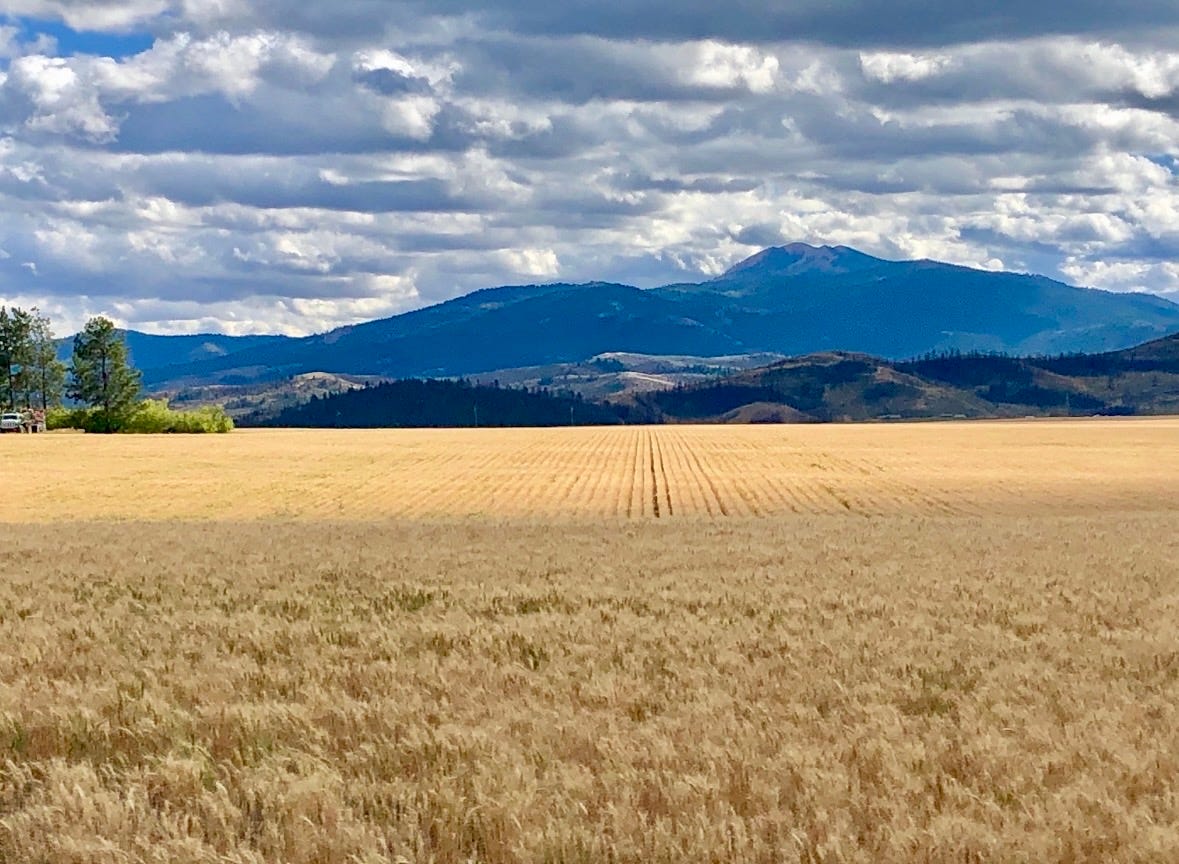
Have you ever looked closely at wheat and tares before?
We know the parable, of course. An enemy came while people slept and sowed weeds among the wheat. The servants eventually discovered what had happened and wanted to pull them up.
The master told them no.
We know the story. Have we ever really looked at the plants?
My father had told me about them and shown me their differences. But now I looked at them anew.
The “tares” Jesus spoke of are generally understood to be darnel, a grass that can look remarkably like wheat while the plants are young. As they mature, the differences become easier to see.
Wheat develops a dense head, its grain gathered closely around a central stem. Darnel is more open and irregular, its seed clusters alternating along the stem.
The resemblance, however, was more than an inconvenience.
Darnel growing among wheat could contaminate the harvested grain. Its seed, if mixed with grain intended for food, could cause illness. Also, if darnel seed remained in the field or became mixed with seed kept for future sowing, the problem could continue beyond a single harvest.
This was no harmless prank.
The enemy had deliberately sown something harmful among what was meant to nourish.
Knowing this, the servants’ urgency later in the story becomes easier to understand.
There is something else that draws my eye and makes my heart grow quiet.
As wheat fills with grain, its head can begin to bend downward. Not every stalk bows—but some of the fullest heads, heavy with grain, do.
That image stood out to me.
Do I resemble the posture of wheat? As the Lord brings forth fruit in me, do I bow?
Suddenly I became less interested in identifying the darnel.
I wanted to understand the wheat.
What Became Visible
There is a small detail in Jesus’ parable that can easily go unnoticed.
The servants did not discover the darnel immediately.
Jesus says:
“When the plants came up and bore grain, then the weeds appeared also.”
Then.
What had been growing beneath the same sun, receiving the same rain, occupying the same field, eventually revealed what it was by what it produced.
The fruit did not make the wheat wheat. The fruit revealed what had been growing there all along.
We can become remarkably interested in identifying the weeds. We label. We sort. We inspect. We decide who belongs in which category.
Sometimes we call it discernment.
And strangely enough, the servants in Jesus’ story seem to have discerned correctly.
“Master, did you not sow good seed in your field? How then does it have weeds?”
The Master does not correct them.
“An enemy has done this.”
Their discernment was right. What needed correction was what they wanted to do with it.
“Do you want us to go and gather them?”
It sounds reasonable.
They know what is growing among the wheat. They know it does not belong there. Their concern is not imaginary.
The Master says no.
“Lest in gathering the weeds you root up the wheat along with them.”
Their zeal for the field could injure the very thing they were trying to protect.
The enemy had planted the weeds; but in their urgency to remove them, the servants could accidentally uproot the wheat.
The servants can see the danger of leaving the weeds.
The Master can see the danger of pulling them.
The servants are looking at what they believe needs to come out.
The Master is looking at what must not be uprooted.
That changes the way I hear the story.
What Must Not Be Uprooted
I had misunderstood the Master’s patience. I had thought His waiting was primarily about the weeds.
Listen again to the reason He gives:
“Lest in gathering the weeds you root up the wheat along with them.”
His restraint is shaped by His love and care for the wheat.
He sees the weeds clearly. He knows where they came from.
“An enemy has done this.”
He does not call them harmless. He does not pretend they belong there. Yet He will allow the field to remain mixed until the harvest rather than risk uprooting what He planted.
His patience is not indifference.
It is protection.
There is wheat here that has not yet reached the harvest, wheat whose roots lie beneath the soil in ways the servants cannot see. The Master will not allow the urgency to remove the weeds to become the reason the wheat is uprooted.
But His answer is not never.
It is until.
“Let both grow together until the harvest.”
I would love to know how those words sounded to the servants.
Leaving the darnel where it was may have seemed dangerous. They could see what had been sown. They knew it did not belong among the wheat.
Let both grow together.
I think I might have panicked.
But Master, what if—
And this may be precisely where trust begins.
The Master was not asking them to believe the weeds were harmless. He was asking them to trust that He knew how to protect His wheat.
There will come a time for separating what the servants cannot safely separate now.
The Master knows the time.
He knows whom to entrust with it; and He knows how to bring His wheat safely to harvest.
What looks like delay from the servants’ side of the field is protection from the Master’s.
The wheat is still growing.
That alone should make us humble.
Recognizing something is not the same as being entrusted to remove it.
Seeing clearly does not mean seeing completely.
The servants can see what is above the ground.
The Master knows what is underneath it.
Let Them Grow
Next, the Master says something I had never really heard before.
In Greek:
ἄφετε συναυξάνεσθαι ἀμφότερα μέχρι τοῦ θερισμοῦ
aphete synauxanesthai amphotera mechri tou therismou
Let both grow together until the harvest.
The sentence begins with ἄφετε — aphete, from ἀφίημι — aphiēmi.
Here its sense is simple:
Let. Allow. Leave.
Yet aphiēmi has a wider range. Elsewhere it can speak of letting go, releasing, remitting, even forgiving.
Jesus is not telling the servants to call evil good. He has already named what happened:
“An enemy has done this.”
He is telling them to leave what they are reaching to gather.
Aphete.
Leave them.
Let them grow together.
And now another word catches my attention:
μέχρι — mechri.
Until.
The Master’s restraint has an appointed horizon.
There will be a separation. But its time and execution do not belong to the servants.
When Jesus later explains the parable, He tells His disciples that the field is the world, the good seed are the children of the kingdom, the weeds are the children of the evil one, the harvest is the end of the age, and the reapers are angels.
The final sorting belongs to God.
This does not mean Jesus has forbidden discernment, correction, or accountability among His people. He teaches those things elsewhere. But this field is the world, and the final separation Jesus describes here belongs not to the servants, but to God.
There is something almost like release in aphete for me now—not as another translation of the word here, but as the posture the command requires.
Open your hand.
Trust the One who sees the whole field.
Leave with the Master what belongs to the Master.
While They Were Sleeping
There is another curious detail in the story.
The enemy comes “while the people were sleeping.”
Jesus never tells us who these sleeping people are. When He later explains the parable, He identifies almost everything else—the sower, the field, the good seed, the weeds, the enemy, the harvest, the reapers.
The sleepers remain unnamed. Neither are they blamed for sleeping. Something happened while they could not see it.
The enemy sowed and then he went away.
By the time anyone recognized what had happened, roots had already grown beneath the soil.
This should make us gentler with one another.
We encounter people somewhere in the middle of their growing. We see what has broken the surface. We rarely know everything that was planted around them, when it happened, what happened while no one was watching, or what lies beneath ground we cannot see.
The servants ask where the weeds came from.
The Master knows.
Still, He does not send them after the weeds.
The enemy has already left. Yet, what he planted could hold the servants’ attention long after he was gone.
He would no longer need to occupy the field. What he planted could occupy them.
The Master gives them another way.
Aphete.
Leave them.
Let them grow.
Whose Field Is This?
My father used to tell me that weeds do not need a gardener.
I wrote about this years later in my father’s memoir. As a child, I thought he was teaching me about the bright yellow Scotch broom growing along the roadsides.
It took me much longer to understand that he was teaching me about attention.
Weeds, he said, grow quite well without our help.
Fruit is different. Fruit needs tending.
He taught me that a careful gardener learns to recognize the difference between what nourishes and what takes, between what deserves our attention and what merely demands it.
For years I thought I understood the lesson. Jesus’ field made me hear it differently.
The question was no longer merely:
What am I looking at?
It became:
Whose field is this?
And what has actually been entrusted to me?
The field belongs to the Master.
The good seed was His before the enemy ever arrived. The enemy entered someone else’s field, scattered what did not belong there, and left.
Nothing about his intrusion changed who owned the field.
The wheat was still the Master’s. So was the harvest. So was the timing.
The Master can afford to be patient because He knows what He has planted.
The servants do not need to save His field for Him.
They do need to be careful not to damage what He loves while trying.
What Has Been Entrusted to Us?
Jesus does not tell the servants to go tend the wheat instead.
So His parable leaves me asking:
If the final separating has not been entrusted to us, what has?
Jesus has given us plenty to do.
Love one another. Feed the hungry. Welcome the stranger. Forgive. Serve. Bear fruit. Make disciples.
My father might plainly have said:
Care for what has been entrusted to you.
It is here that another image of Jesus comes to mind.
Not a field this time, but a vine.
“Abide in Me.”
Remain.
A branch cannot bear fruit from itself. It bears fruit by remaining joined to the source of its life.
The images are different, but together they make me wonder whether we underestimate how sacred remaining can be.
Stay rooted.
Abide in Christ.
Receive what you cannot create on your own.
Grow.
Bear fruit.
And be very careful about reaching for another person’s roots.
There are things beneath the soil you cannot see.
The Wheat Bows
Before the wheat ever bore anything, it had first been sown by the Sower.
The wheat does not become wheat by producing grain. The grain reveals what the Sower planted.
Fruit is not frantic proof of belonging. It is the life already given becoming visible.
The seed was given. Rain fell that the wheat could not summon. Sun warmed it that the wheat could not kindle. Life moved silently through soil and root and stem by means the plant could never make for itself.
The wheat received.
It remained.
It grew.
It bore grain.
And as the grain fills and becomes heavy, something beautiful can happen.
The wheat bows.
Now I cannot stop seeing the field.
A whole stand of mature wheat beneath the heavens, bowed heads moving together when the wind crosses them.
When wheat is young, it reaches upward. Then the grain fills. The head grows heavy. Some of the fullest heads bend toward the earth.
They have not failed. They are carrying something.
The question is no longer whether I can identify the darnel growing around me.
It is much closer to my heart.
What am I doing with what the Master has entrusted to me?
Am I spending my days inspecting the field, or bearing the fruit Christ has called me to bear?
Am I occupied with what the enemy has planted; or am I abiding in the One apart from whom I can do nothing?
The mature wheat has little need to lean over and inspect its neighbor.
It is already bowed beneath the weight of what it has been given to bear.
I love that this is not where Jesus ends the story.
There is a now.
And there is a then.
Now, wheat grows among weeds.
Now, roots lie tangled beneath soil the servants cannot see.
Now, the field can look confusing.
The Master is not confused.
Jesus reaches back toward the ancient promise of Daniel and tells His disciples where all of this is going:
“Then the righteous will shine like the sun in the kingdom of their Father.”
Then.
What is difficult to distinguish now will not remain hidden forever.
The wheat does not need to stand taller than the weeds to prove what it is.
It remains.
It receives.
It grows.
It bears.
And the Master knows it.
One day, Jesus says, it will shine.
Until then, the wheat can bow.
—
© Gilda Wray. All rights reserved.
This is good news for the mother of an addict daughter
Hey thanks for the restack, brother! 🙏